Conservation Lands Foundation Joins Lawsuit Challenging Trump’s Expansive Oil and Gas Leasing Plan for Western Arctic

Conservation Lands Foundation • February 19, 2026

Lawsuit challenges Trump’s expansive oil and gas leasing plan for western Arctic Agency guts long-time protections for areas like Teshekpuk Lake and the Colville River

FOR IMMEDIATE RELEASE

February 19, 2026

Contact: Kris Deutschman, kris(@)conservationlands.org


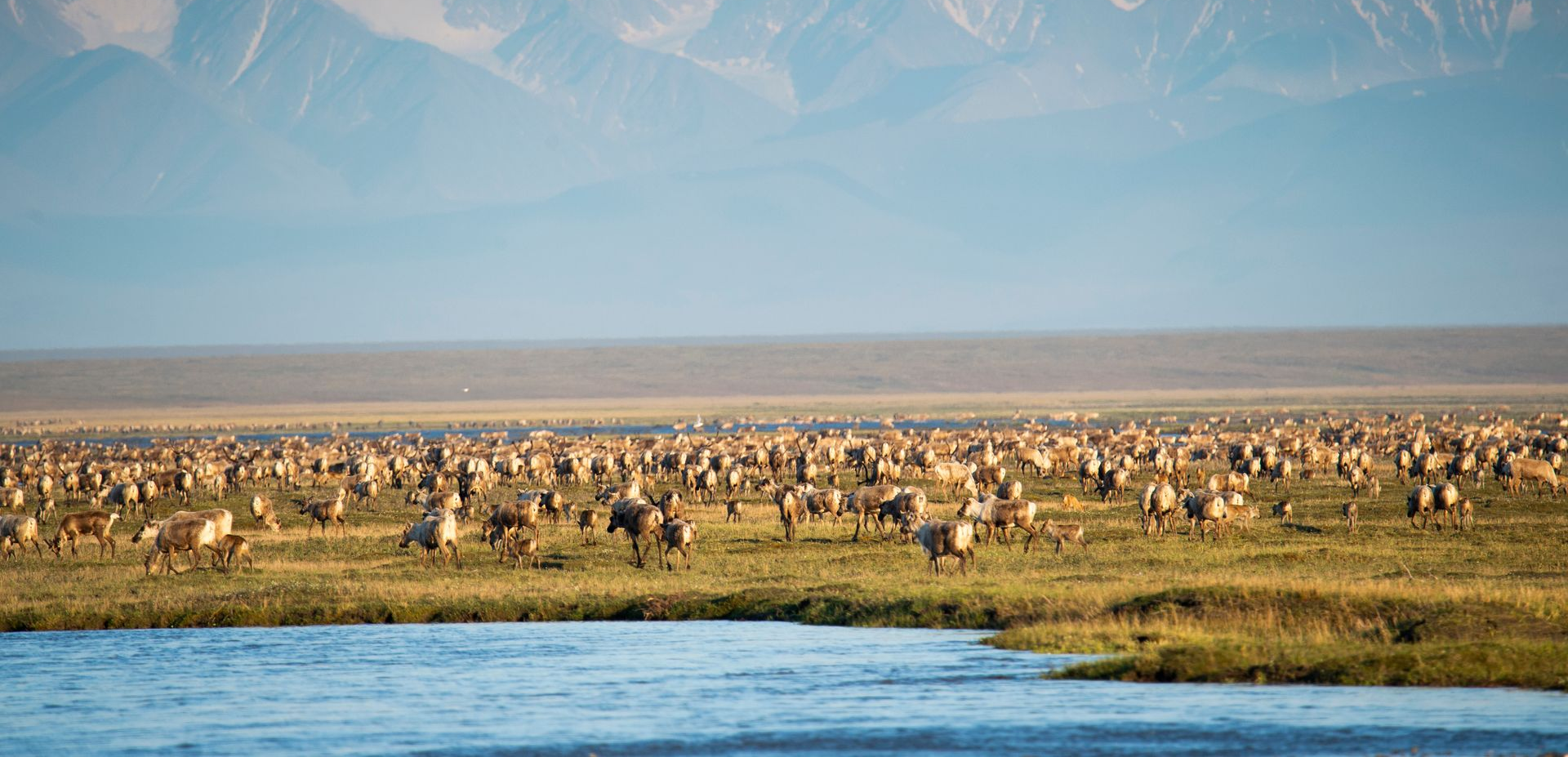
ANCHORAGE, Alaska — A lawsuit filed today in U.S. District Court in Alaska challenges the Trump administration’s approval of a 2025 western Arctic management plan that opens over 80 percent of the National Petroleum Reserve-Alaska to oil and gas leasing and industrialization, posing a profound threat to a vast Arctic region vital to local communities and wildlife. The plan alters the boundaries of the long-time protected Teshekpuk Lake Special area and eliminates the Colville River Special Area entirely — rolling back protections for caribou, birds, and other wildlife that depend on these critical areas. The U.S. Bureau of Land Management claims this plan will allow it to hold lease sales in the Reserve until at least 2045 without further analysis of impacts, sidelining the public process and sacrificing informed decision making about these public lands into the foreseeable future.


“This plan asks our homelands to give more than they can bear,” said Nauri Simmonds, executive director of Sovereign Iñupiat for a Living Arctic. “For generations, our elders have taught us that places like Teshekpuk Lake and the Colville River are not ‘resources’ to be expanded into — they are our relatives, the places that hold our stories, our food, and our connection to those who walked this land long before it was settled. When the government breaks its own promises and pushes again for more land, more drilling, more sacrifice, it echoes a long history of broken agreements with Indigenous Peoples. Our communities are not asking for expansion or special treatment; we are asking those in power to honor the promises and commitments that were assured to us when all of this began. We stand in this moment with love for our homelands and with a vision for a future where decisions are made with humility, restraint, and respect for the land’s limits. Sometimes, the most responsible choice is to recognize that too much is being asked of us — and of the land itself.”


The lawsuit filed by Trustees for Alaska on behalf of six clients calls out the administration for breaking multiple laws, including the National Environmental Policy Act, Naval Petroleum Reserves Production Act, and the Alaska National Interest Lands Conservation Act. The lawsuit raises claims related to the Bureau’s decision to roll back the protections for designated Special Areas like Teshekpuk Lake and the Colville River and its failure to do a new analysis of the potential impacts to subsistence or ways of minimizing those impacts.


“The Bureau’s decision to roll back protections and open the Western Arctic’s most sensitive areas to oil and gas shows a complete disregard for the law and protective measures that are necessary to ensure that these public lands sustain the health of local communities and wildlife,” said Suzanne Bostrom, senior staff attorney with Trustees for Alaska. “The Bureau has failed to meet its own legal obligation to provide maximum protection for areas like Teshekpuk Lake and lands and waters essential to the health of western Arctic animals and people.”


In a related filing today, Trustees also submitted a motion to reopen a 2020 lawsuit challenging the 2020 management plan adopted and challenged during Trump’s first term. The 2020 litigation argued that the environmental review for the 2020 integrated activity plan failed to address the true impacts of oil and gas on water, land, wildlife, and people, while also failing to adopt protective measures. Groups settled that lawsuit after the Bureau pulled back the unlawful 2020 decision and made it clear that the agency would do further environmental reviews for future lease sales, as required by law. The Bureau’s new 2025 decision reinstates much of that 2020 decision and now claims that the agency does not need to do further environmental reviews for lease sales through at least 2045.


The law firm Trustees for Alaska filed the lawsuit in Anchorage, Alaska, on behalf of six clients: Sovereign Iñupiat for a Living Arctic, the Northern Alaska Environmental Center, Alaska Wilderness League, Conservation Lands Foundation, Defenders of Wildlife, and Sierra Club.


Group statements:


"The administration’s assault on the Western Arctic sacrifices Indigenous heritage and the resources that sustain the region's people and wildlife in exchange for fossil fuel profits,” said Chris Hill, Alaska-based CEO of the Conservation Lands Foundation. “With 7 out of 10 Western voters demanding land protection over extraction and a 57% majority of voters in key battleground districts supporting policies to protect the Arctic from new drilling, it’s time the administration stops its dangerous folly and accepts the fact that economic health and conservation aren't just compatible—they’re inseparable."


“This lawsuit is about defending our homelands, our food systems, and our right to be heard before decisions are made that permanently alter the Western Arctic,” said Krystal Lapp, president of the board for the Northern Alaska Environmental Center.  “Teshekpuk Lake and the surrounding Special Areas sustain caribou, fish, birds, and the communities who rely on them for subsistence. For Indigenous people, these lands and waters are not abstract acreage on a lease map — they are living relatives and the foundation of our cultures and economies. Federal law requires meaningful consideration of subsistence protections. We are taking this action to ensure that future generations inherit lands and waters capable of sustaining them.”


“By pushing this plan forward, the Department of the Interior is turning its back on the wildlife and lands it is obligated to protect,” said Nicole Whittington-Evans, senior director of Alaska and Northwest programs at Defenders of Wildlife. “Opening over 80% of the Reserve – close to 19 million acres - to drilling puts imperiled wildlife like polar bears, caribou, and millions of migratory birds at serious risk. We will continue to fight for our irreplaceable public lands and their incredible wildlife – especially when those charged with their stewardship won’t.”


“Over the past year, we’ve seen that no place in Alaska is safe from industrial activity if the Trump administration has their way,” said Andy Moderow, senior director of policy of Alaska Wilderness League. “We bring this lawsuit because Alaska’s public lands are so much more than a playground for extractive industries, and prioritizing corporate profits at the expense of long-term, sustainable public land uses that define the Alaskan way of life is simply misguided. The Trump administration cannot just ignore the laws that protect fish and wildlife, subsistence, recreation, and other non-extractive uses, and so we are asking the court to hold them accountable.”


“The Western Arctic is home to some of the most fragile public lands in the country, but the Trump Administration wants to sell them out to Big Oil CEOs," said Mike Scott, Sierra Club's Oil and Gas campaign manager.  "These landscapes are critical for wildlife, water resources, and communities, and they are on the front line of climate change. We will continue to fight Trump’s giveaway and keep the ‘public’ in public lands.”


Header image: Florian Schulz | ProtectTheArctic.org


More on the Western Arctic:

Congress with text
November 19, 2025
Washington, D.C. — The U.S. House last night used the Congressional Review Act to consider and pass three resolutions undermining public lands protections in three areas in Alaska and Wyoming. The three resolutions are: S.J. Res. 80 – disapproving of the ‘‘National Petroleum Reserve in Alaska Integrated Activity Plan Record of Decision’’. H.J. Res. 130 – disapproving of the ‘‘Buffalo Field Office Record of Decision and Approved Resource Management Plan Amendment’’. H.J. Res. 131 – disapproving of the ‘‘Coastal Plain Oil and Gas Leasing Program Record of Decision’’. Below is a statement from Jocelyn Torres, Chief Conservation Officer of the Conservation Lands Foundation, which represents a national network of community advocates who are solely focused on the public lands overseen by the Bureau of Land Management (BLM), including the National Conservation Lands: “Today’s action by the U.S. House is part of a series of coordinated attempts to roll back common sense management of public lands. It’s simple - America’s public lands should be managed for the public good. These resolutions undermine the U.S. Bureau of Land Management’s authority to manage public lands for the benefit of all Americans, not just those who seek to buy up and close public lands to public access and benefit. “It is clear from the recent actions of this Congress to remove protections from key areas across the West that supporters of these actions are opponents of public lands. By removing the BLM’s authority to manage lands, these resolutions ensure that privatizing or industrializing them are the only viable remaining options. It’s a classic example of trying to solve a problem that was self-inflicted for the express purpose of achieving an outcome that benefits you. “We remain opposed to these one-sided, destructive attempts to roll back the clock on public lands protection and we’ll continue to work with members of the Friends Grassroots Network to oppose these obvious attempts to use public resources for private gain. We’ll continue to remind members of Congress that the overwhelming majority of Americans support responsible, effective, balanced management of the public lands.” ###

November 17, 2025
Rule repeal leaves irreplaceable wildlife habitat vulnerable to unchecked oil drilling, despite 300,000+ public comments in support of conservation
By Conservation Lands Foundation September 7, 2023
FOR IMMEDIATE RELEASE: Contact : Kris Deutschman September 6, 2023 C: 970.670.0193 kris@conservationlands.org Durango, CO – In response to today’s announcement by the White House proposing sweeping protections for America’s Arctic including a proposed rule for the Western Arctic, Brian Sybert, executive director of the Conservation Lands Foundation, released the following statement: “The Western Arctic is an area that holds tremendous value for wildlife, Native communities, and the overall climate resiliency of the region. We’re in strong support of the Biden-Harris Administration and the Interior Department taking this important step forward. “The Conservation Lands Foundation has long recognized this 22-million acre remote parcel of public land in the Western Arctic as a national treasure and that we must manage it for the conservation of wildlife such as grizzly bears, wolverines, caribou, and avian life that is unmatched. We encourage the American public to engage in the public process for the proposed protections and demonstrate strong support for protecting the natural and cultural values that make the Western Arctic a national treasure. “For over a decade, the Conservation Lands Foundation has worked to protect the Western Arctic. We are grateful to see the Biden-Harris Administration taking bold action to protect this treasured arctic landscape.” ####